Stockton
American WomanStockton is the home of Jim Shimada’s nursery, and the place where Jenny’s flight from her arrested boyfriend leaves a lasting mark on her family. The city’s nursery, house, and roadside greenhouse are not just a point of origin: they become a landscape of absence, suspicion, and return, where political upheaval is felt through broken glass, shuttered doors, and plants left without care.
Home and nursery
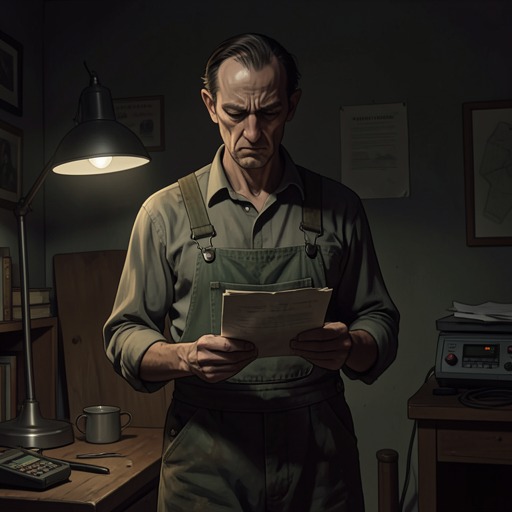
Jim’s nursery is both his workplace and the center of his life in Stockton. The greenhouse, with its bulbs, plants, and trees, anchors a yearly routine: in June he sorts the bulbs that have not sold, deciding whether to discard them or plant them himself. The nursery stands beside a two-lane highway outside town, where passing cars are usually an unremarkable part of the working day. That setting makes the slow movement of a car on the opposite shoulder stand out to Jim, who peers through the greenhouse leaves to watch it.
The home and greenhouse also reveal the strain of time. When Jenny visits later, she finds both buildings looking as though they have not been painted since her childhood. She has been urging Jim to retire, but his wry reply imagines the alternative as living in her commune and eating steamed tofu. The exchange makes their different ideas of care and independence visible without resolving them: Jenny sees an aging business and a father who should stop working, while Jim resists the future she proposes.
Jenny’s disappearance and the damaged greenhouse
Three years and three months before the June 1975 day when Jim notices the slow-moving car, Jenny’s boyfriend was arrested and she disappeared. The Stockton newspaper ran shrill stories identifying her as a local girl and the only daughter of the nursery’s owner. Jim responded by withdrawing from public life: he stayed inside with the drapes drawn, unplugged the telephone, and put a closed sign on the door. Then a brick broke through the greenhouse’s great pane of glass. Wrapped around it was a note expressing racist hostility toward Japanese communists.
The broken pane turned the greenhouse into a physical record of the attack. Its shards scattered among the plants, and Jim continued to find fragments years later while repotting jasmine or rearranging shelves. The damage was not a single moment he could leave behind; it persisted in the ordinary work of tending the nursery. The unfamiliar breeze moving through the broken glass, and the fragments that kept resurfacing, made Jenny’s absence tangible in a place otherwise defined by recurring seasonal labor.
For several months, Jim was also under matter-of-fact surveillance. A new customer with no evident gardening knowledge appeared every few days, and Jim understood the visits as a pretext. The surveillance and the brick were not shown to be connected, but both seemed to him to circle back to Jenny. When the customer stopped coming, her trail remained cold. Years later, the car on the roadside revives Jim’s vigilance: he wonders whether it could be the brick-thrower, then tries to dismiss the fear as a habit. His expectation of another visit from federal agents is tied to an older, blameless guilt left by his wartime internment, giving Stockton’s roadside unease a history beyond Jenny’s disappearance.
Departures and returns
After Jenny is arrested, Jim travels from Stockton and spends a week waiting in a motel while calling her lawyer each day. He learns that Jenny has received legal pads and disposable pens and may be working on a statement, but that she is not yet willing to see him. The statement does not seem to advance. Jim knows the visit has changed nothing; at the end of the week he gives the lawyer his Stockton number and takes the bus home. His greenhouse remains shuttered while he is away, its plants wilting in the heat, so the attempt to reach his daughter carries a cost in the neglected place to which he must return.
On the bus journey back, the driver lets Jim off on the shoulder across the highway rather than taking him all the way into town. In the dark he makes out the lopsided shape of his house and crosses the road with his backpack, uncertain whether its apparent safety means he has been left alone or is being watched. Stockton is thus rendered through the small distances between home, highway, and nursery: familiar ground that no longer feels entirely secure.
Later, Jenny drives to Stockton in her own car, relishing the freedom of driving with registration and a license even as she exceeds the speed limit. The return briefly feels cinematic and grand, but the sight of the house and greenhouse makes her wince. Her arrival reverses the earlier pattern of absence, yet it does not restore a simple homecoming: the buildings carry the visible signs of neglect, and the father waiting outside is unusually prepared, with his doors locked and bandannas ready. Stockton’s importance lies in that double register—its familiar domestic routines endure, while the damage and fear left by Jenny’s disappearance continue to shape how father and daughter meet there.